



No one likes to think about what to do when a disaster strikes. But, if you haven’t thought about it, how will you know how you’ll respond? Making an emergency plan for your family is the first step in keeping your family safe. The second step is making sure everyone knows the plan.
What Constitutes an Emergency?
When formulating your plan, think about what things might happen at home, at work, and in your community. What natural disasters are likely in your area?
Common Natural Disasters to Plan For:
- Floods
- Hurricanes
- Earthquakes
- Tornadoes
Each of these events will require a slightly different plan. Knowing what you could be facing will help you make your plan.
How does your community alert its members of an impending disaster? Is there a siren system? If so, do you know what the different patterns mean?
Emergencies are not just natural disasters. What about a break in? What if a family member is seriously injured? Considering such scenarios in your plan will ensure you are better prepared for whatever emergency you face.

Making Your Emergency Plan: 2 Essential Steps
Step One: Identify Team Members
Knowing who is able and willing to carry out your plan is vital to the success of that plan. Think about your neighbors and coworkers.
Key Questions to Consider:
- How will you communicate with your neighbors in an emergency?
- What if phones are out?
- What are each potential member’s strengths?
- Does anyone have medical training?
In a disaster situation, each team member should have a role to play. Assign roles beforehand, considering each person’s strengths and abilities. Doing so will ensure that everyone knows what to do.
Step Two: Make Your Plan
After thinking about what could happen and who you can count on in an emergency, you also need to consider the physical aspects of your situation.
Sketch a layout of your home or workplace, including all entrances and exits. Include windows as well as doors. In an emergency, you must consider all options.
Critical Planning Questions:
Do you have a storm cellar or a safe room? How do you access it? Does it have a secondary access point?
What is your escape route from every room or area?
How will you get out if something blocks the “normal” path?
Do you need to get away from your home/place of work or stay in it? Where will you meet?
What are your safe areas?

Essential Emergency Supplies for Your Safe Room
Be certain your safe room is well-supplied. You may have to be in it for some time until rescue can get to you. The following items will make that easier:
- Water
- Blankets/pillows
- Flashlight or other light sources
- Radio/communications devices
- Extra batteries for any electrically powered devices
- Self-protection tools
- First aid kit
- Shelf-stable food
- Hygiene related needs
- Entertainment (cards, games, puzzles, books, etc.)
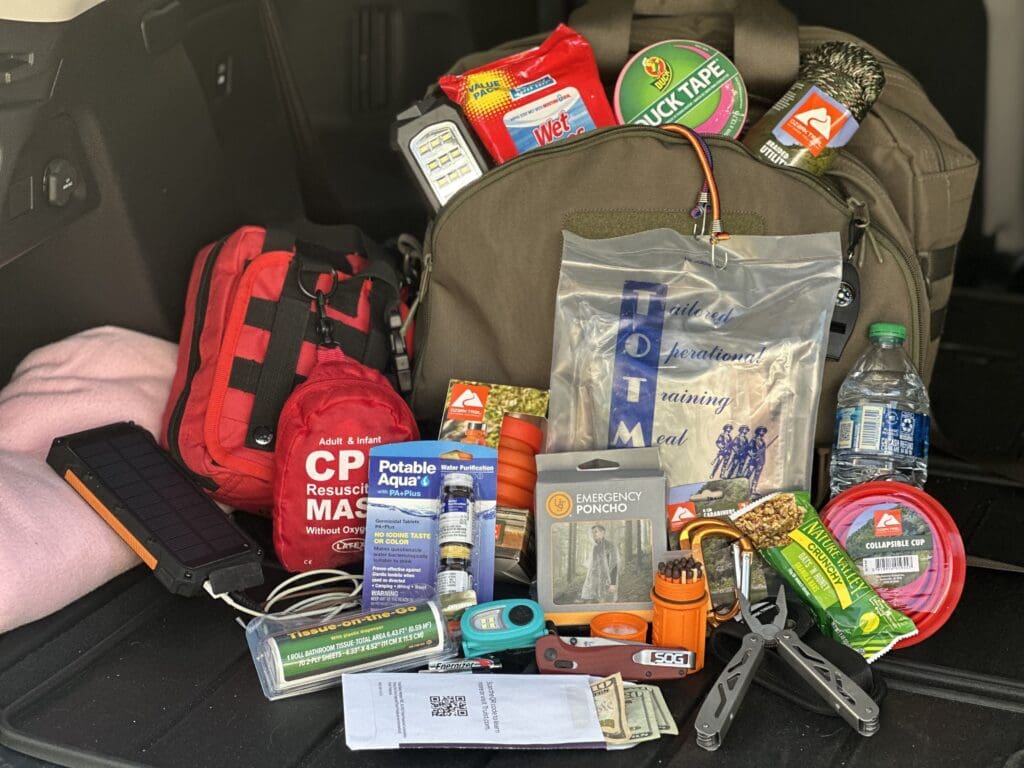
While you may not initially think you need something to entertain you, what about those who are with you? Small children and teens may need a distraction from the seriousness of the situation.
Communicating Your Emergency Plan
The single biggest problem in communication is the illusion that it has taken place.”
– George Bernard Shaw
Having a plan and assigning tasks only works if your team knows the plan and what their assignments are. While no one wants to seem paranoid, we must realistically address what needs doing and how to do it.
Discussions like this can be informal, but they cannot be overlooked. Have a friendly gathering with your network. Be sure that each member of your network has contact information for all members.
Important Communication Considerations:
It is also helpful to know in advance who will be in each member’s immediate circle. Will you be looking out for your immediate family, or are there others you need to keep under watch? How many people are in your neighbors’ immediate families?
Another good idea is setting a safe word or phrase to alert family/network members that your emergency plan has been implemented. Consider a word or phrase that is easily remembered but immediately conveys the situation at hand.
Finally, give serious thought to how to communicate if you are unable to meet up at the designated meeting spot. Do you have a place to leave written communication in case electronic or cellular devices are down? Does everyone know that plan?
Conclusion: Be Prepared, Stay Safe
Having an emergency family plan will not prevent disasters from happening. It will, however, afford you and your loved ones the best chance of mitigating the situation and minimize the impact.
