



You’ve reached that point in your firearms journey where you have children, or maybe grandchildren, that are ready and mature enough to be involved in shooting sports. Congratulations! This is very exciting! It can also be very scary at the same time. Not every child is ready at the same time, and not every child is ready for the same information at the same time, so knowing the child that you’re teaching, or spending some time with them and getting to know them, is very important.
Think Like an Instructor, Not Just a Parent
As their instructor, and that is what you need to consider yourself, not just the parent or aunt or uncle, you have to give proper instruction for the age and cognitive ability, you have to model good behavior, and guide them through the activities with hands-on training and repetition. This isn’t a one-and-done exercise, and not one type of instruction or one type of drill will fit each student, no matter what age they are.

Every Child Learns and Grows Differently
So, knowing that one type of drill or one type of instruction won’t fit, getting to know each student is really paramount, especially in children.
Children learn differently.
Children grow differently.
Every eight-year-old is not the same in their ability, and this is something that you need to know, making it really valuable to get to know that child a little bit before you put a firearm in their hand. There are a lot of drills and fun things that you can do. Even if it’s just talking about firearm safety with a coloring page with a very young child, believe me, what they’ll take away from that will forever be attached to that interaction and how they handle it going forward. If you teach them that firearms are serious business, and that you need to have an understanding of them before you touch them, it is going to go a long way on how they will look at firearms their whole life. If you teach them that they are tools and, in the proper hands, a tool does good, they will always have the respect for it, and they hopefully will always seek out more instruction.
Make Sure They’re Ready: Match Mental and Physical Ability
So you have to make sure that they are ready: ultimately, make sure they’re mature enough and physically able to do the task, and then practice and praise. Don’t push them; wait until they’re at the right age for what you’re asking them to do. Not every five-year-old can pick up a youth model .22 rifle and shoot it. There are some that can. There are some that just physically aren’t able. There are some that mentally aren’t able, and that’s the key to children and firearms: it is matching their mental ability to their physical ability. Practice often, praise more!
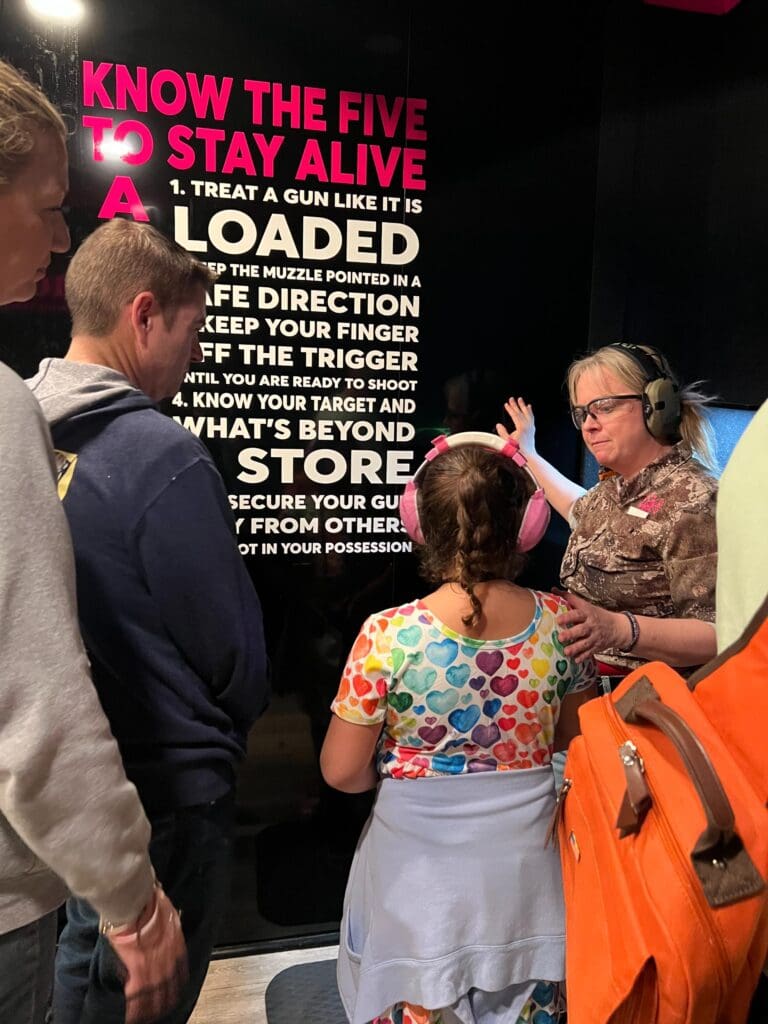
Start With the Firearm Safety Rules
I can’t stress enough that you need to start with firearms safety rules. Start there; make it a game and fun to learn. Make it something they can be proud of because they know them. Little rewards along the way go a long way as well. Maybe learning and reciting the safety rules means they can actually shoot that youth .22, again, saying that they are physically and mentally ready, with your supervision.
Bring Them Along to the Range Before They Shoot
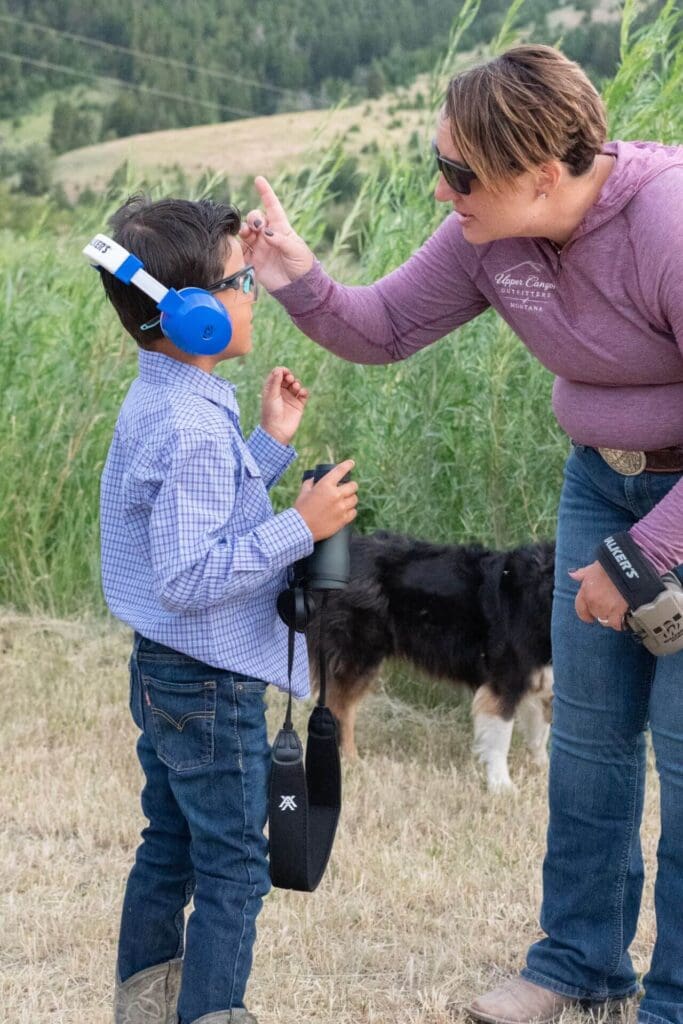
I think often parents are more ready than the children are to physically shoot firearms. They may not yet be ready, but it sure doesn’t hurt, and in fact it’ll go a long way later on, to bring them with you. Make sure they understand that they have to wear hearing and eye protection every time they go. Make them understand where they can and cannot be. Make them understand voice commands on coming up to the line to shoot, and practice safety again. Let them see what the correct thing to do is, and guide them through why it is correct, so that when you’re ready to put that firearm in their hands, they’re going to understand all the safety rules and it’s going to come naturally.
Keep It Fun With Engaging Targets
And as they get older, start exploring different avenues. Maybe it is just bench shooting of a .22 for a very young shooter, but as they get older, they get some fun targets: something that spins, maybe it’s a balloon, maybe it’s a target that changes color when you hit it. You know, these are the things that engage kids and progress them from feeling like this thing is really heavy and it’s scary and I have to know all the things and I have to be right 100% of the time. And that’s true, but it can still be a great experience. That will stand true for any age shooter, but match the engagement level to the shooter. I mean, even for me and my adult son, we go to the range and we get bored pretty quickly, so I’m always looking for fun targets, challenging drills and things that he and I can go and think through, like real-life scenarios, because that’s where we are in our learning process.
Progress to New Firearms and Shooting Sports
As a child gets better, introduce them to different types of firearms. They might go from that youth model to a bigger handgun, and eventually maybe onto shotgunning. Maybe you are lucky enough to have a youth shotgun team in your area. Take them out. Let them see the place. Let them meet the people. But again, do all this when they are ready. Don’t ever force them into it. They won’t want to be a part of it.
A Personal Journey for the Whole Family
Ultimately, children and firearms is a very personal journey for the children and their parents, as well as the children and their instructor. There is an amount of gravity that has to be taught, but we don’t want to scare them to a point where they don’t ever want to pick them up, because there’s a lot of really great training, mentally and physically, that anybody who shoots can learn, and it can become such a fun family activity. For more information, please reach out to Shoot Like A Girl for more guidance or call your local shooting range.